
Our Blog
Dental patient safety requires prevention, diagnosis, and follow-up throughout life.
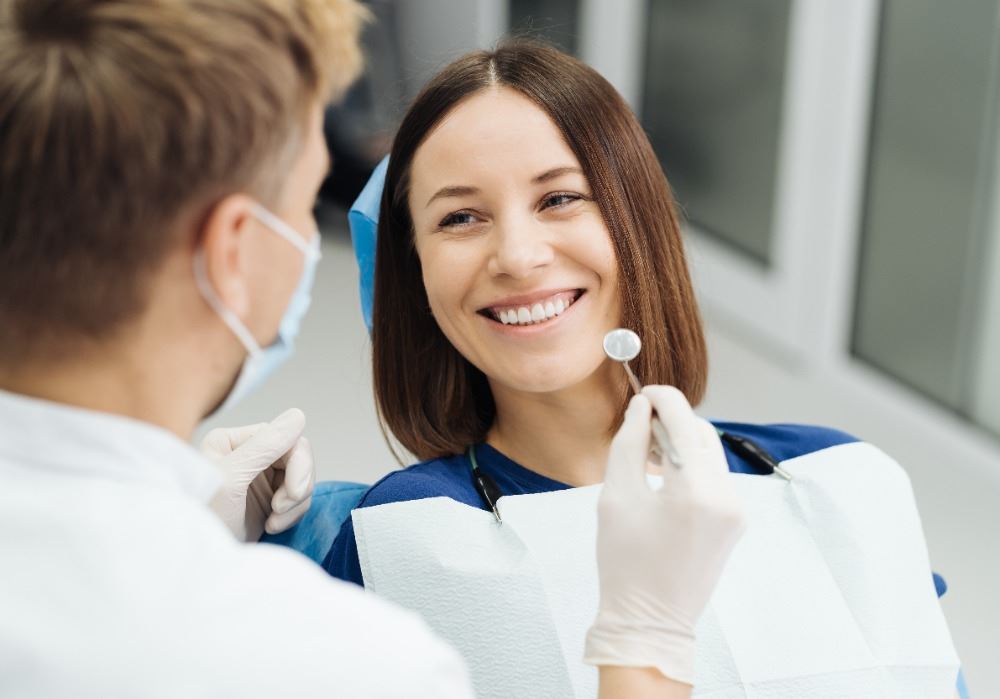
Image by ArthurHidden on Magnific
On the occasion of World Patient Safety Day—observed on September 17 under the World Health Organization (WHO) slogan "Safe care throughout life!" and dedicated to safe care for non-communicable diseases—the General Council of Dentists of Spain highlights the importance of integrating patient safety into all stages of dental care: from prevention and diagnosis to treatment, maintenance, and follow-up.
Oral health is an inseparable part of general health. The WHO classifies oral diseases among the most common non-communicable diseases and notes that they share risk factors with other chronic conditions. In this context, ensuring safe care requires a holistic assessment of the patient, taking into account not only their oral health status but also their general health.
Safety therefore begins before any procedure is performed. A complete and up-to-date medical history—including knowledge of the patient's medical conditions, allergies, current medications, past medical history, and other risk factors—enables the dentist to establish a diagnosis, properly plan the treatment, and anticipate potential complications.
Dr. Óscar Castro Reino, President of the General Council of Dentists, asserts that safe dental care begins with a proper patient history. “Before recommending any treatment, it is essential to understand the patient’s general and oral health status, identify potential risk factors, establish an accurate diagnosis, and explain the various therapeutic options. Each person presents specific clinical circumstances; therefore, care must always be individualized and tailored to their needs.”
Prevention also means improving patient safety.
Prevention is one of the pillars of safe dentistry. Periodic check-ups allow for the assessment of oral health and the detection of certain conditions in their early stages, which can facilitate simpler, more conservative treatment approaches.
Proper oral hygiene, the control of risk factors, and the early detection of conditions such as caries, periodontal diseases, or potentially malignant lesions of the oral mucosa contribute to preserving health and reducing the need for more complex interventions.
This approach is closely linked to the principles of minimal intervention and maximum possible preservation of natural tissues, provided they are compatible with the patient's clinical needs.
“The indication for any procedure must address a clinical need and be supported by scientific evidence,” explains Dr. Castro. “Whenever possible, we must prevent disease, preserve healthy tissues, and opt for therapeutic alternatives that achieve the clinical goal with the least necessary intervention. Preserving long-term oral health must be the priority.”
Minimal intervention does not mean providing less treatment than necessary, but rather choosing the appropriate procedure for each situation, avoiding unnecessary interventions and preserving dental, periodontal, and bone structures to the greatest extent possible.
Safety must accompany the entire care process.
The theme chosen by the WHO for 2026 places a special focus on people with non-communicable diseases, who may require healthcare over prolonged periods and across different care settings.
This continuity of care is particularly relevant in dentistry. Certain systemic diseases and pharmacological treatments can influence the planning and performance of dental procedures; therefore, having access to up-to-date clinical information is essential.
Added to this are other elements that are part of daily practice in dental offices: infection prevention and control, instrument sterilization, the justified use of diagnostic and radiological tests, responsible medication prescribing, correct patient identification, and team preparation to respond to potential medical emergencies.
Safety does not end when a procedure concludes. Follow-up allows for the assessment of progress, the detection of potential complications, and the implementation of necessary maintenance measures to preserve the results and the patient's long-term health.
Technology at the service of clinical judgment.
Digital transformation is introducing new tools that can facilitate the diagnosis, planning, and monitoring of certain dental treatments. Digital patient records, imaging techniques, intraoral scanners, and various planning systems enable access to increasingly precise information and the improvement of numerous clinical processes.
“Digitalization offers great possibilities and can help improve the precision and planning of many procedures,” notes Dr. Castro. “However, a technological tool—no matter how advanced—cannot replace professional judgment or make a treatment suitable for every patient. Innovation delivers real value when it addresses a clinical indication and improves healthcare.”
Exercise caution regarding treatments and advice without professional supervision.
The General Council of Dentists also warns against the dissemination—particularly via the internet and social media—of oral health recommendations made by individuals lacking the necessary healthcare training, as well as the promotion of products or procedures presented as quick fixes or solutions suitable for everyone.
The fact that a product can be easily purchased or that a procedure has a primarily aesthetic purpose does not mean it is free from potential adverse effects or suitable for all patients.
“Any procedure that could alter the teeth, gums, tooth position, or occlusion must be performed by a licensed dentist, and always after assessing oral health status and establishing a diagnosis,” argues the president of the General Council.
“We dentists have a responsibility to support the patient throughout the entire course of care: preventing issues whenever possible, diagnosing rigorously, providing transparent information, treating based on scientific criteria, and ensuring appropriate follow-up. That continuity is the foundation of safe, responsible, and high-quality dentistry throughout a patient's life,” concludes Dr. Óscar Castro Reino.